

I built my first website in 1999.
One page. Online ordering. A candy store in Michigan called Sherni’s Candies, connected to me through my business partner’s dad, who would stop by whenever he was up that way and bring back fudge and chocolate to share with people back in Dallas.
That was 27 years ago. And honestly? I’ve basically been doing the same thing ever since. Just at a bigger scale.
Here’s what I’ve noticed over those years: the web has been declared dead roughly every three to four years. The dot-com bust. WordPress. The app revolution. Social media. No-code. And now, AI.
Each time, people panicked. Each time, the web didn’t die. The internet actually grew.
In 2010, Wired Magazine declared the web dead.
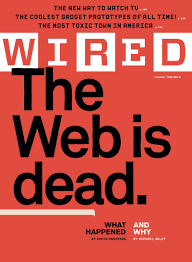
The source of their declaration was data showing the share of web traffic as a whole of internet traffic had indeed declined.
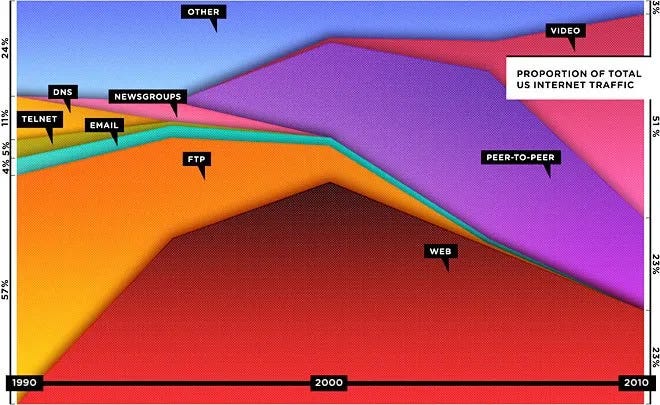
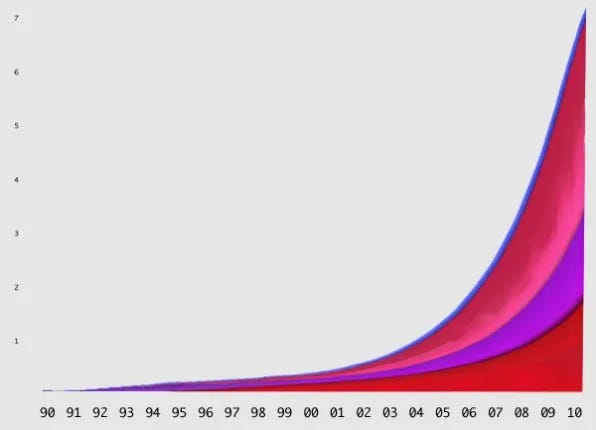
At the time, only about 25% of the world’s population used the internet–and users only spent 1-2 hours per day online. By 2023, that was up to 67% of the world’s population and close to 7 hours of daily use. The web wasn’t shrinking. The pie was just getting bigger faster than anyone could see.
Rob Beschizza came out with a quick correction that better illustrated what was happening…
But I want to be honest with you: this time feels different.
The Wake-Up Call I Didn’t Expect
A few months ago, we relaunched the E2M website with a full rebrand. Our design team had built a complex Figma file, and we decided to try building the frontend the AI-first way rather than the traditional way.

Traditional process: about 20 hours from Figma file to working WordPress front-end.
Around March 2026, two things converged: a significant Claude Sonnet update dropped, and OpenClaw was released. There was a real “ah-hah” moment for our team about what this new generation of tooling could do for web builds. So we gave the project to one of our AI-first WordPress developers and told him to go for it.
He got from Figma to a working, high-quality front-end in about five hours. That’s a 75% reduction in time on a narrow, controlled use case, but still. Game-changing.
Here’s the part that kept me up that night: websites are about 50% of our business at E2M, and we run on a billable hours model. I was proud of the team. And also lying awake running the math in my head:
“Figma to WordPress homepage. 5 hours vs. 20 hours. 4x faster. 75% less time. Lower cost. More output. What does this do to agencies like us?”
And then I thought about the 14th floor.
We had just signed a lease on the entire 14th floor of our Ahmedabad office. The whole reason was growth: demand was rising and we needed the space for the team we were planning to hire. But now, sitting with this result from an internal pilot, I had to wonder: is the future of the 14th floor a bunch of Mac minis running OpenClaw?
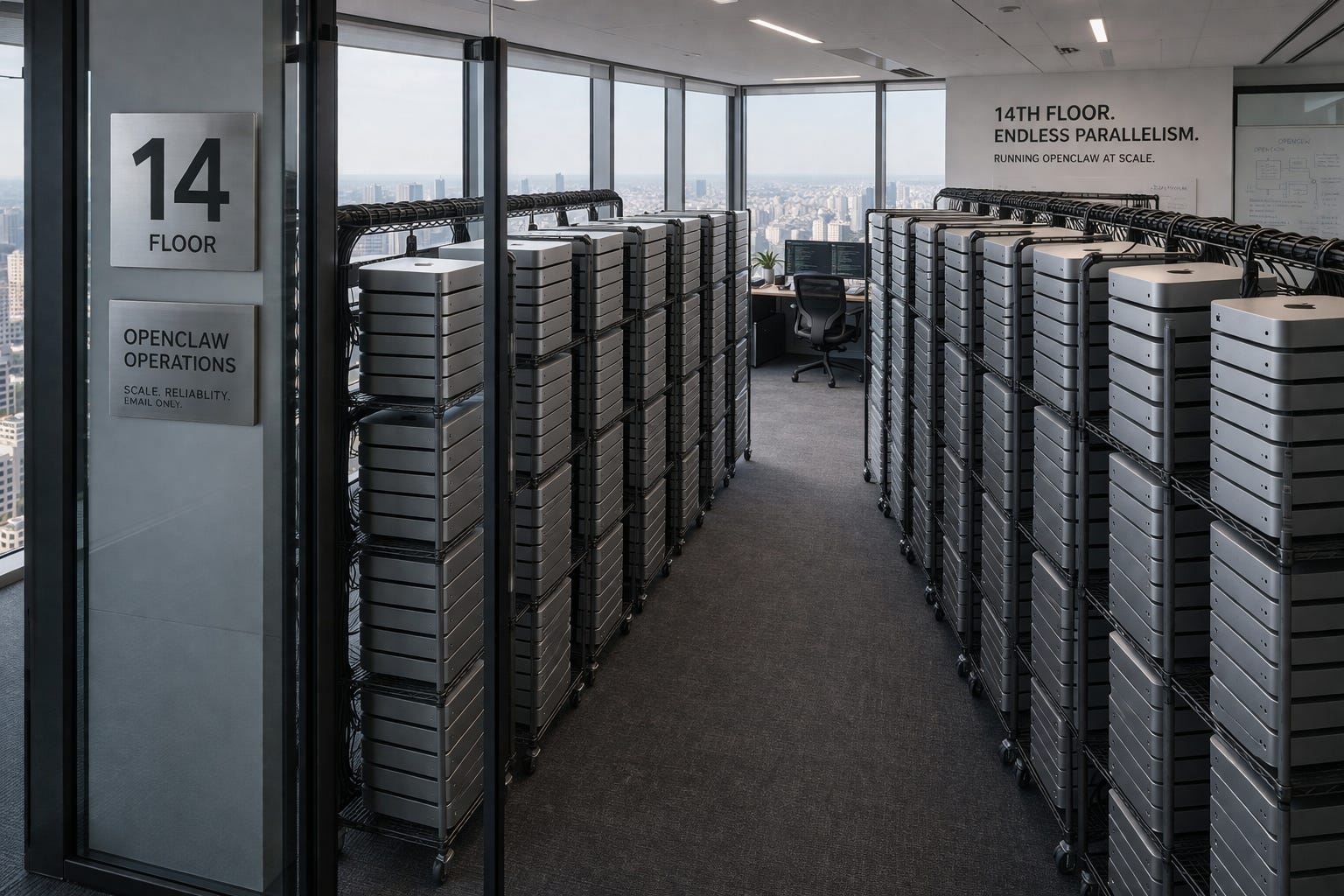
That’s the “Who Moved My Cheese?“ moment for agencies right now.
The Car Wash That Changed How I Think About Agencies
I started looking around for inspiration, other industries that had navigated this kind of structural shift.
The first car wash opened in Detroit in 1914. Workers pushed cars through an assembly-line tunnel, each with a designated task: soap here, rinse there, dry at the end. According to the historical record, early full-service car washes employed dozens of workers just to clean a single car through the line. It was entirely people-powered.

Today, most car washes run with one person. Or none.
Dirty car through one side. Clean car comes out the other.
Sound familiar?
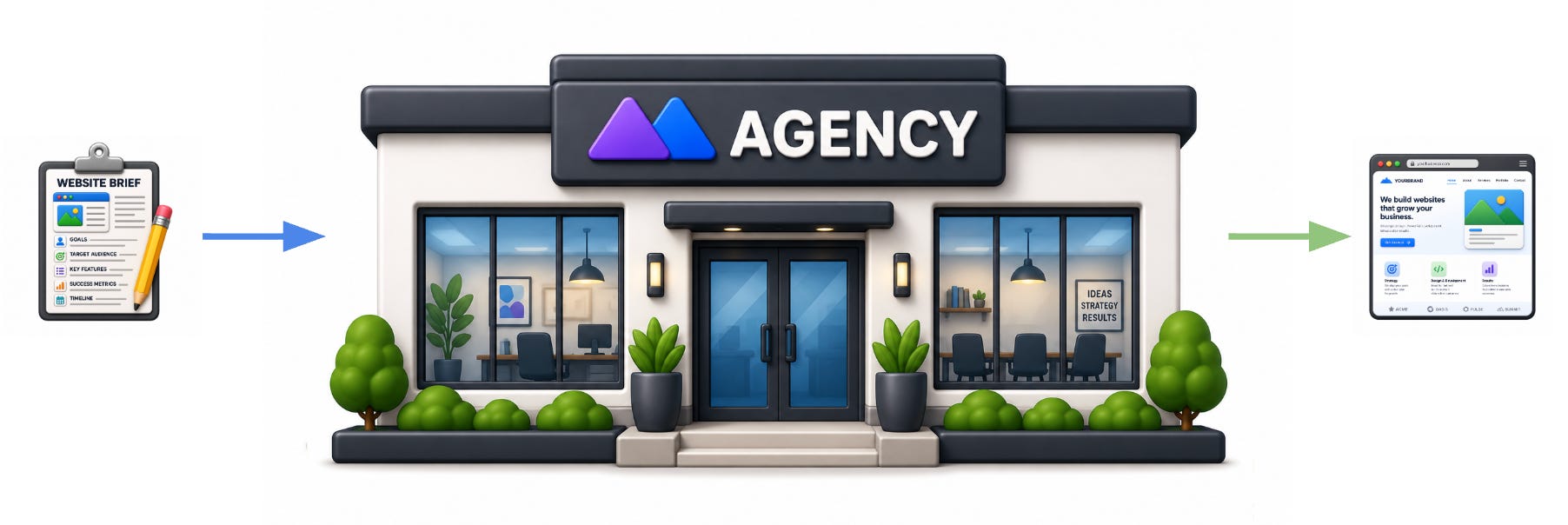
Brief comes in one side. Finished website comes out the other.
The roles inside a digital agency today, designer, front-end developer, back-end developer, copywriter, SEO analyst, are all still there.
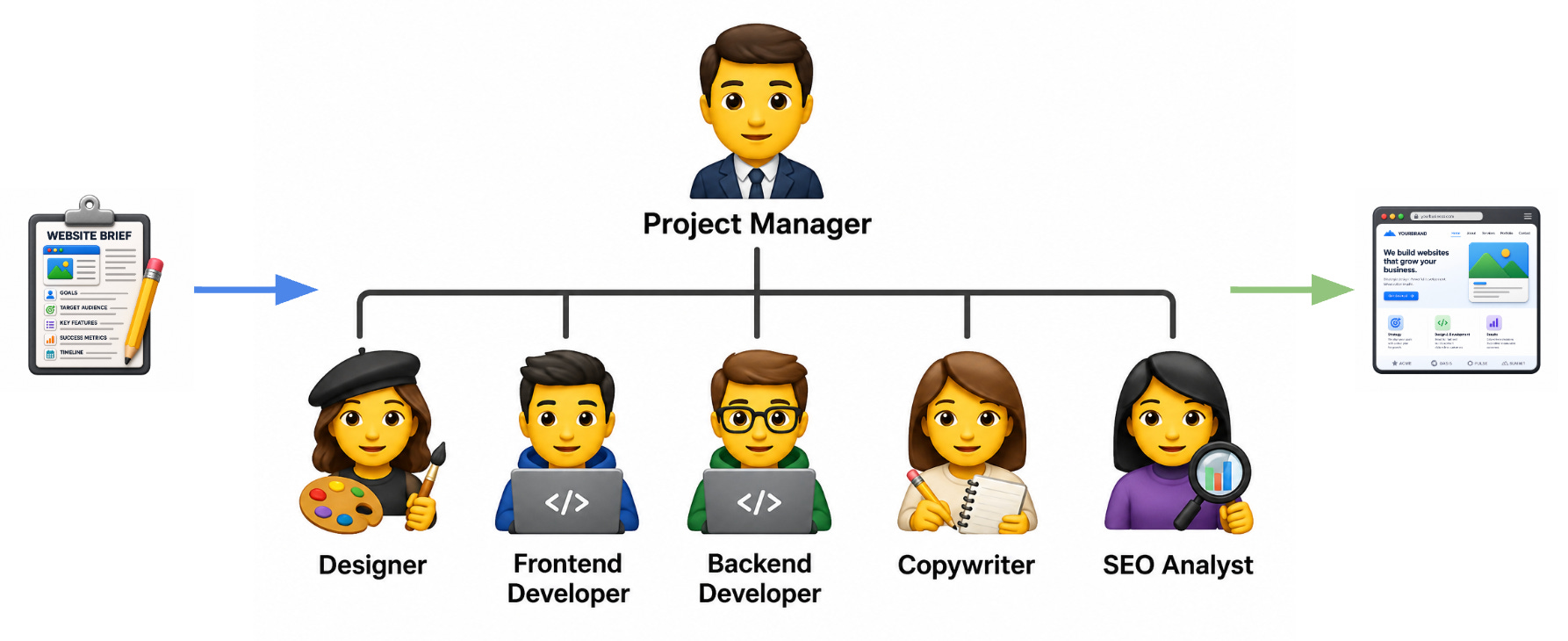
But they’ve gone from being the people doing the work to being the people using AI tools to do the work faster. That’s just the first stop.
We’re still in the “spray gun instead of a bucket” phase. Faster. More efficient. But a person is still holding the hose.
At some point, the hose job gets automated too.
Netflix Didn’t Kill Blockbuster. It Just Stopped Investing in DVDs.
The agency industry is not in the website or SEO business. We are in the outcomes business.
Netflix figured this out. They were never in the DVD business. They were never even in the movie business. They were in the entertainment business. And when streaming became possible, they didn’t ask their pack-and-ship team to learn video encoding. They built an entirely new business and firewalled it from the old one, letting innovation flow into streaming while the DVD business conducted a controlled descent.
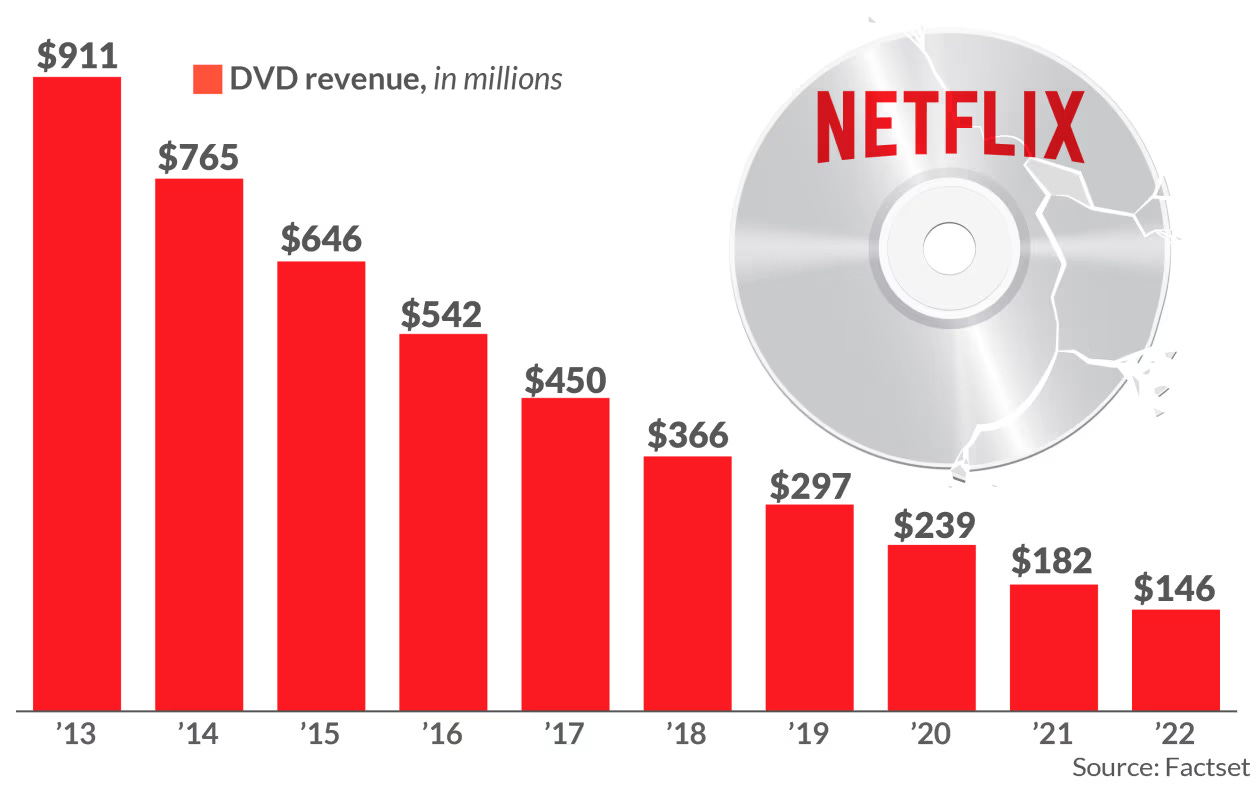
Blockbuster kept the streaming project as a department. A line item. It bled cash and had no runway to become what it needed to be.
Netflix built streaming as a separate company with separate muscle.
The result: at its peak, Blockbuster was doing $6 billion a year. And yes, streaming destroyed it. It destroyed every mom-and-pop movie rental store in the country too. That trail of destruction is real.
Today Netflix is seven times Blockbuster’s peak at $45bn+ annual revenues.
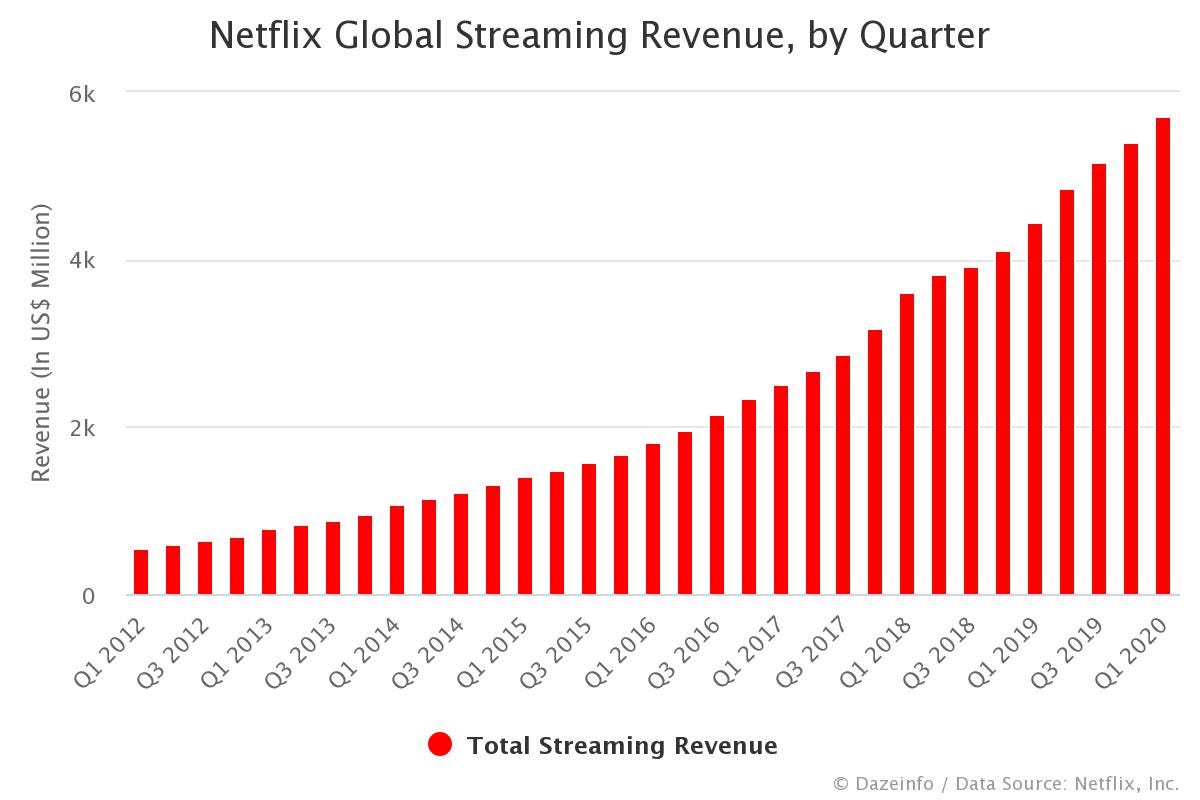
But streaming also created things that had never existed before. YouTube. TikTok. The entire creator economy. Binge watching as a cultural norm. “Netflix and chill” as a phrase. Parents using a tablet or phone to keep kids entertained at a restaurant. Millions of households where the TV runs Disney+ like a babysitter so adults can have a couple hours of peace. None of that existed in the DVD world.
And the economics of what streaming unlocked are staggering. YouTube alone paid out over $22 billion to creators last year, and has paid out over $100 billion to date, just in ad revenue share. Full-time BMX riders with hundreds of thousands, sometimes over a million, subscribers making a living following their passion.
Kids to teenagers to baby boomer influencers can create global brands with a pocket-sized device costing $500.
Because the distribution infrastructure finally existed.
Streaming is to entertainment what AI is to agency services.
Yes, it will disrupt things. Probably a lot of things. But it will also create entirely new behaviors, new models, and new opportunities we can’t fully see yet.
The question for agency owners isn’t whether AI will change your business. It’s whether you’re going to be Netflix or Blockbuster about it.
Why “AI-First” Isn’t Enough Anymore
For over a year I’ve been telling agency owners: build an AI-first agency. Get all your people using AI tools. Integrate AI into every role.
I still believe that. But I’ve realized it’s a rest stop, not a destination.
An AI-first agency is still a traditional agency where everyone is holding a better spray gun. The org chart still has a project manager, a designer, a front-end dev, a back-end dev, a copywriter, an SEO analyst. They’re all using AI assistants. They’re producing work faster.
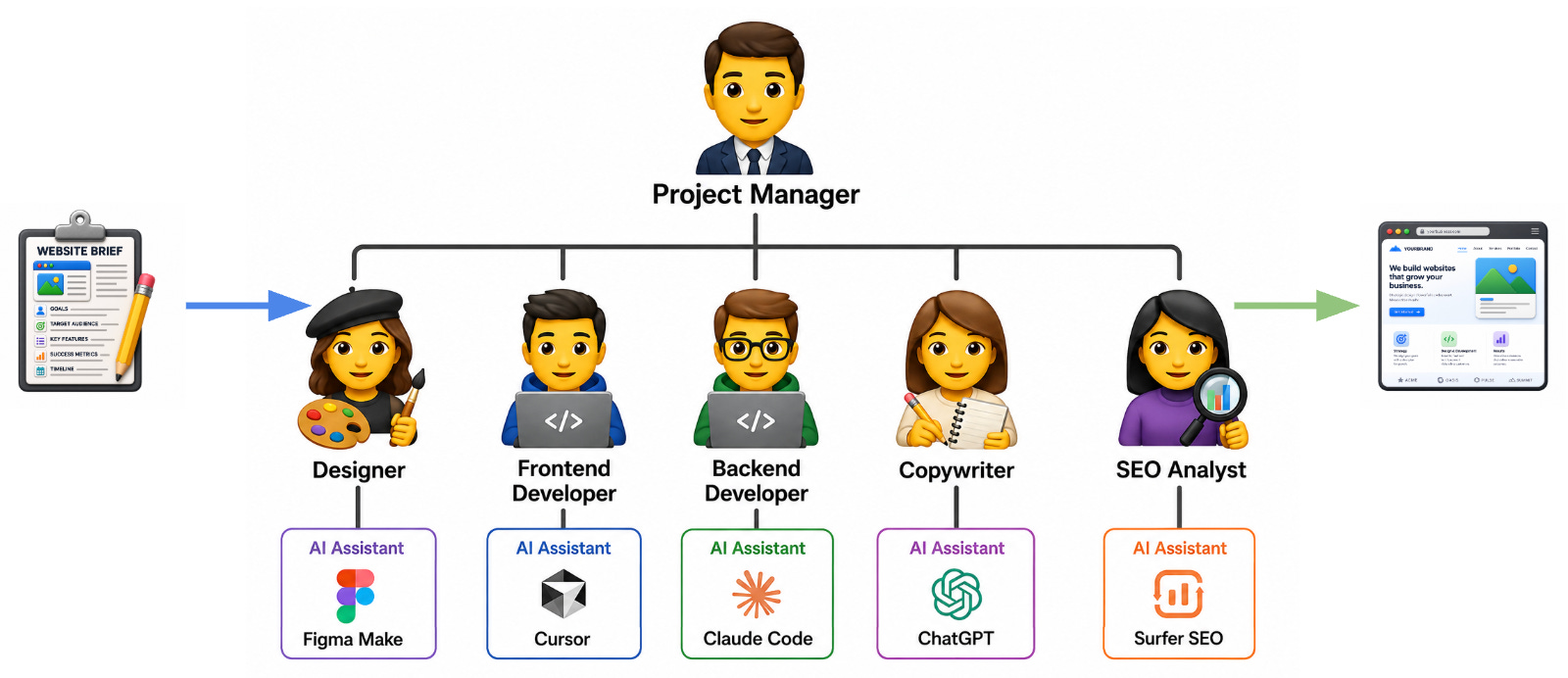
But the delivery model hasn’t changed. The billing model hasn’t changed. The fundamental structure of how work gets done hasn’t changed.
And I think that’s the wrong frame.
Here’s the old model vs. where we’re going:
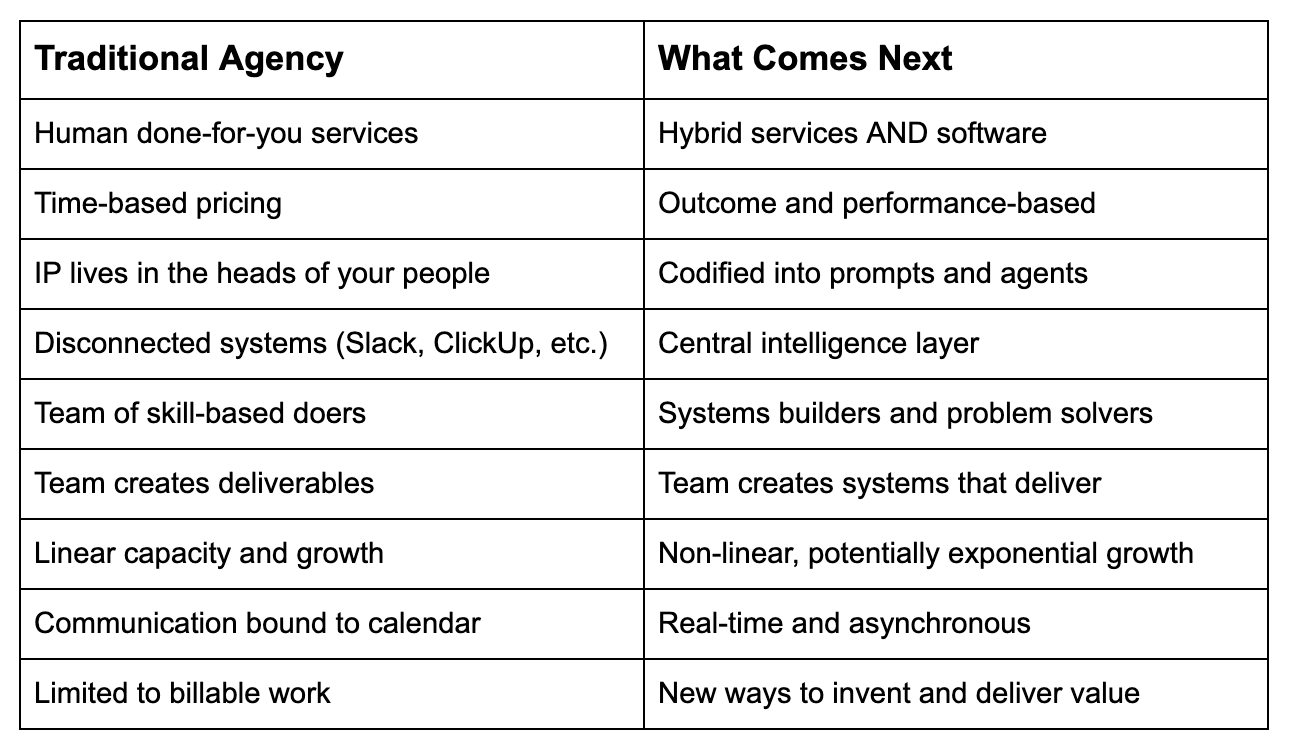
Introducing the Agentic Agency
We need a new name for this model. And I think I have it.
Not “AI-first agency.” Not “AI agency.” Those are too narrow.
And here’s why: AI alone doesn’t explain what’s happening. What we’re really experiencing is a convergence. Large language models (LLMs) were the missing piece, but they only became useful because of everything that had been building underneath them: exponential growth in processing power, the plummeting cost of storage, global internet connectivity and speed, a mature software ecosystem, open application programming interfaces (APIs), and more. None of these alone creates what we’re seeing now. Together, they do. Calling the new agency model an “AI agency” misses that. It’s like pointing at one instrument and calling it the orchestra.
The right term is Agentic Agency.
Agents are the AI systems that do the job, software powered by LLMs, automation platforms, and APIs. An agentic agency isn’t building deliverables anymore. It’s building systems that autonomously produce deliverables.
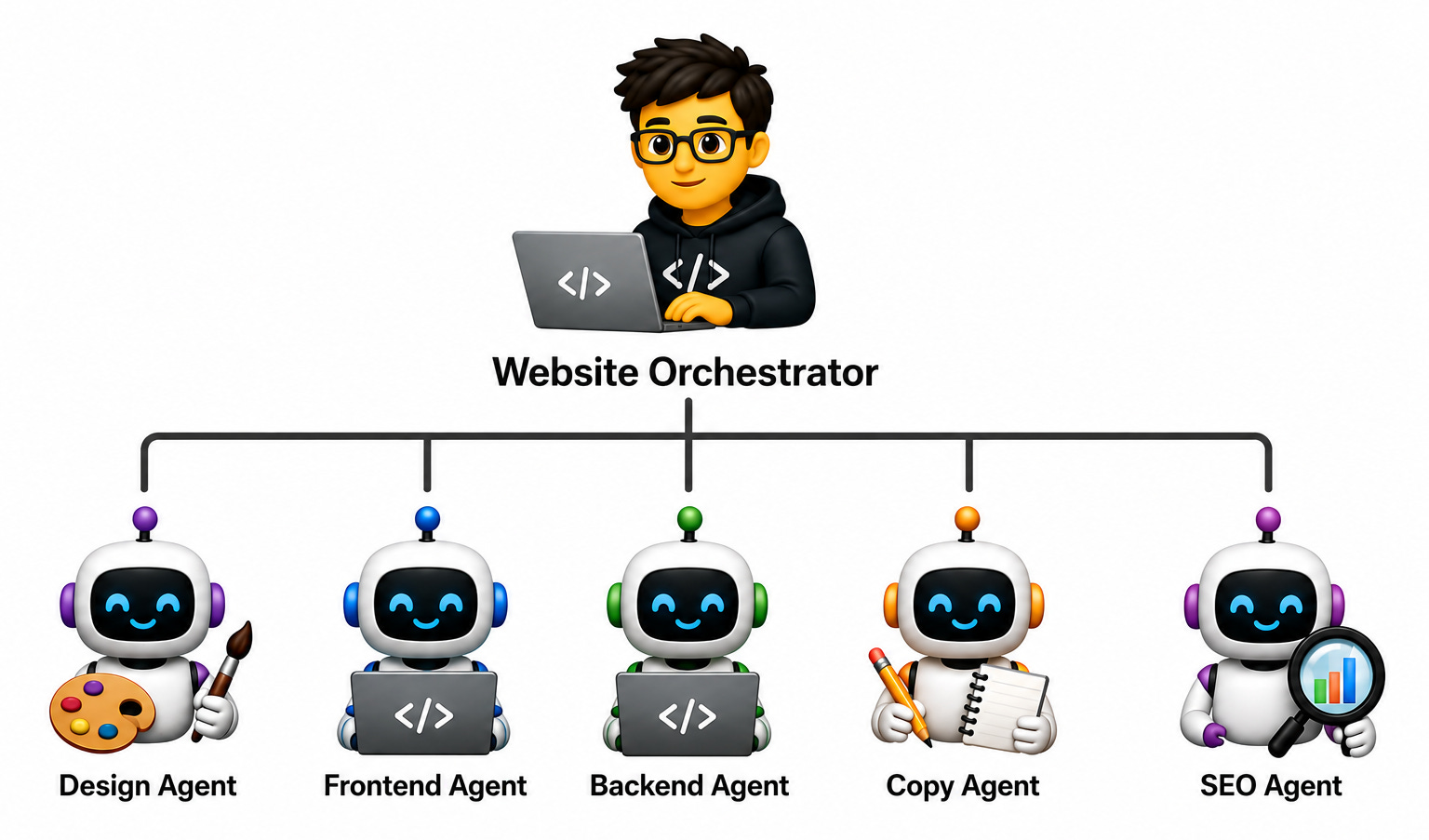
And in the future, even the orchestrator role evolves into what I’m calling an Outcomes Engineer: someone who understands what all the channels can do, what the agents can build, and how to design systems that produce business results at scale.
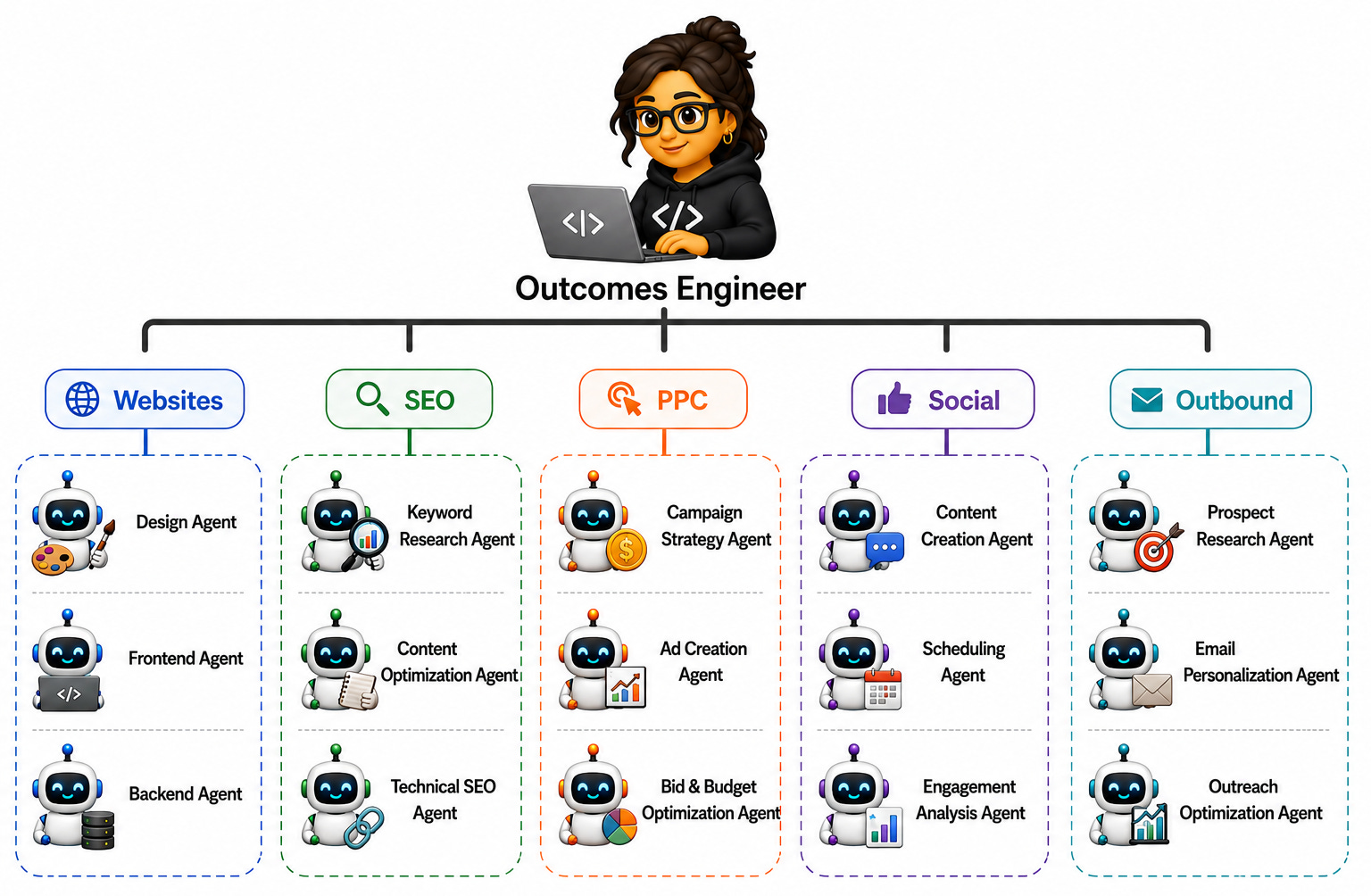
Think of a Waymo operator. Right now, there’s roughly one human operator supervising 50 autonomous vehicles. They’re not driving. They’re watching sensors, catching edge cases, escalating when something goes sideways.
That’s what the agentic agency looks like in practice: human strategists overseeing agent systems, catching issues, refining the work, and continuously improving the machine.
This isn’t a human-less model. Tesla tried to automate too much too fast and ran into production problems because robots can’t match human dexterity for certain tasks.
I read a story that Elon, at one point, demolished a wall at the Gigafactory to more easily jettison the robots that weren’t as good as humans in the loop.
The same will be true in agencies. Some things still need human judgment, taste, and relationships. The goal isn’t to eliminate humans. It’s to stop deploying them on tasks agents can handle better.
What the Math Says About Where This Is Going
Sam Altman has said AI capability is doubling roughly every six months. Even if that’s directionally accurate rather than precisely true, the math gets uncomfortable fast.
Doubling every six months:
In 1 year: 4x more capable than today
In 5 years: over 1,000x more capable than today
In 10 years: over 1,000,000x more capable than today
Think about the things AI can’t quite do today in your agency, the tasks that require human judgment, taste, or nuance. The things you’re thinking right now: “AI can’t do that yet.”
In five years, many of those workflows will be fully agentic.
This isn’t a prediction about a specific timeline. It’s a direction. And the direction is clear.
What We’re Actually Building at E2M
I want to be direct about something: E2M has been a dedicated services company since it was founded. When I joined as CEO, I was committed to keeping it that way. I had watched too many agencies go down the road of launching their own software products, only to dilute their focus, lose money, and ship tools that never saw daylight or profit.
But my thinking started to change. Our AI Solutions team, which started as a three-person squad, is now 80+ people. It’s become our largest growth area. The requests went from occasional pilot projects to a consistent, compounding demand. And watching our team build custom software for clients that actually worked, actually got used, and actually drove outcomes, I couldn’t ignore what was in front of me.
Here’s what we’re building today:
Outbound lead engines, proposal generators, automated follow-ups, multi-stage onboarding agents, campaign workflow automation, keyword research agents, SEO audit tools, lead qualification systems, AI customer support chat, client reporting portals, agency command centers, and more.
We started with advanced automations. Those turned into custom agents. Those turned into full AI applications.
And the important thing to say: we are continuously investing in our traditional delivery model too. AI assistants, automation, and custom software are making our web, SEO, and PPC teams faster and more effective every quarter. Traditional services are still the core of what E2M does. We value our agency partners and the quality of delivery deeply. But we are also clear-eyed that building an agentic agency is the future, and that is where we are pointing.
We’re running both in parallel, like Netflix ran DVDs and streaming at the same time. The difference is where our biggest bets are for the future.
“Will Businesses Still Hire Agencies?”
I get this question a lot. Agency owners are genuinely worried about it. If every business has access to AI tools, why would they still pay for an agency?
Here’s how I think about it.
Imagine a city with 100 plumbing businesses and 100,000 customers. Every one of those plumbing companies has access to the same AI tools: Claude, ChatGPT, all of it.
What happens?
The plumber who tries to run their own marketing while out on job sites every day is not going to win. They’re going to lose to the plumber across town who hires an agency with an expert outcomes engineer, someone who knows how to build marketing systems, run dynamic A/B tests, launch a new website in hours rather than weeks, and generate compounding organic traffic.
Those losing plumbers will eventually say: we can’t go out of business. We need one of those agencies.
But here’s the catch: they’re not going to hire the traditional agency that takes three months to build a website and another three months to launch a PPC campaign. They’re going to hire the agentic agency that can build them a full marketing system in days and be running experiments within the first week.
The market will sort this out. And agencies building agentic systems will win those clients.
What Business Are You Really In?
An E2M advisor named Serhat Pala put it this way:
“The customer does not care about your kitchen. The customer cares about dinner.”
A lot of agencies are obsessing over the kitchen right now. Which AI tools to use. Which workflows to build. Which prompts to write. That’s necessary, but it’s the wrong primary question.
The right question is:
What business are you really in?
If you run a marketing agency, you’re in the “get more customers for your clients” business. Not the PPC business. Not the SEO business. Not the content business. You’re in the growth business.
If you’re in app development, you’re in the “solve business problems faster and cheaper” business.
If you’re in web design, you’re helping businesses convert more visitors into customers or communicate more credibility to their market.
Once you know what business you’re really in, the path to building an agentic agency becomes clearer. You’re not replacing deliverables with deliverables. You’re building systems that produce the outcomes your clients actually hired you for.
Sequoia put it this way:
“The next trillion-dollar company will be a software company masquerading as a services firm.”
That’s the agency of the future. Services firms that build proprietary software systems to deliver and scale their outcomes. Some of those will eventually own entire categories because their systems are just better.
Three Paths Forward
Based on everything I’ve seen inside E2M, watching hundreds of agency owners, and spending three days at Vistara with some of the sharpest agency minds I know, here’s how I think about the move:
1. New Models. For example, Troy Dean is building a $1M/year agency with no staff and 10 hours a week, where agents interact with clients via Slack, prompt them for their content, manage workflows, and a human orchestrator oversees the whole system. He calls it The Headless Agency. This is real and it’s already working. Think Waymo operators supervising 50 autonomous vehicles each. That ratio is coming to agencies.
2. Launch Products. GetStanley.ai is a content agent that operates entirely over SMS and voice messages. Clients already live in their text messages. The agent meets them there. This is the movie-in-the-bathtub version of agency delivery: convenient in ways that were structurally impossible before. Some of what looks like software today is actually a service with software powering the delivery.
3. Services AND Software. This is E2M’s path. We’re building AI systems and using those systems to deliver client outcomes–and we’re deploying some of that software directly with customers so they can deploy with little to no intervention from our team. As the software improves, the delivery gets more effective and more efficient. The two compound together.
There is no single right answer. But there is a wrong answer: staying fully in the old model and hoping AI is just a tool upgrade rather than a structural shift.
One Prediction I’ll Plant a Flag On
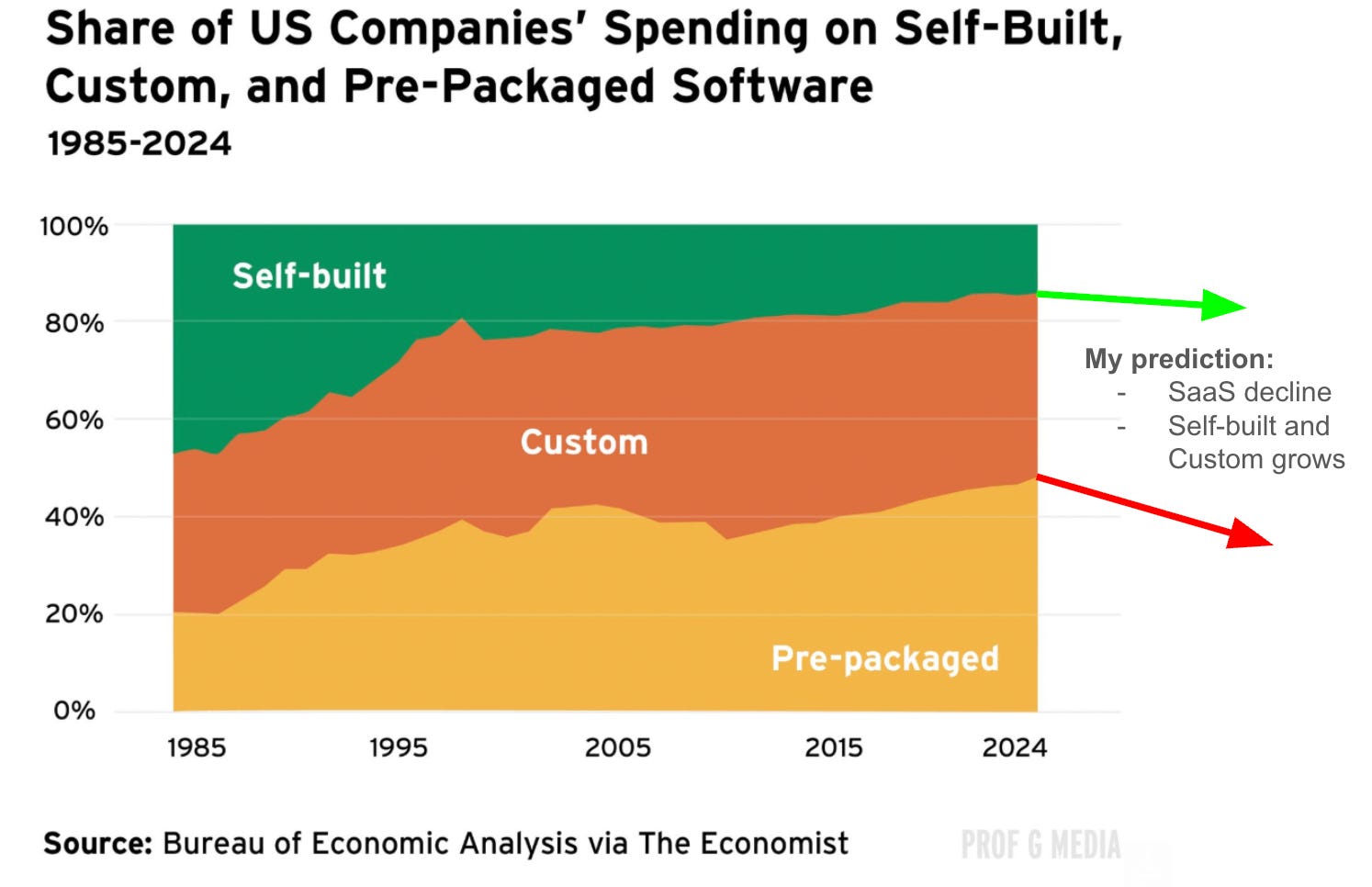
We’re about to see a renaissance in self-built and custom software.
For most of agency history, building custom software was expensive and out of reach. You needed developers, infrastructure, capital, and a long runway.
Now, you can build in English. The cost of creating software has dropped dramatically, and it will keep dropping. This means agencies that previously could never build proprietary tools now can. And the agencies that do will have structural advantages over the ones that don’t.
My prediction: SaaS (Software as a Service) will decline in relevance for many categories. Self-built and custom will grow.
The constraint is no longer technical. It’s imagination.
This Is Why We Named Our Conference Vistara
Two weeks ago at Vistara in Austin, E2M’s annual AI conference for digital agencies, I introduced the agentic agency to a room of 250+ agency owners over three days.
“Vistara” means limitless potential. The idea was that AI should expand what’s possible for agencies, not just make the current model slightly more efficient.
That’s the spirit behind the agentic agency concept. This isn’t just about surviving the disruption. It’s about finding new cheese: new behaviors, new models, new revenue streams, new possibilities that wouldn’t have existed without the disruption.
Streaming didn’t just destroy Blockbuster. It created YouTube, the creator economy, binge watching, and a BMX rider with a million+ subscribers making a full-time living following their passion because the distribution infrastructure finally existed.
The agentic era will create its own equivalent. New categories. New roles. New ways of delivering value that we can’t fully picture yet.
But only for the agencies that decide to move.
The Question I’ll Leave You With
One of the questions from Who Moved My Cheese? that I keep coming back to:
What would you do if you weren’t afraid?
If you weren’t afraid of AI, what would you build?
If you weren’t afraid of changing your model, what would you change?
If you weren’t afraid of looking wrong, what would you try first?
I don’t think the agentic agency is a threat. I think it’s the most interesting opportunity the agency world has seen in 25 years.
The cheese has moved.
Time to go find it.
Brent Weaver is the Chief Executive Officer (CEO) of E2M, a white-label digital agency serving 400+ agency partners with 350+ team members across web, SEO, PPC, AI services, and fractional account management. E2M is the host of Vistara, an annual AI conference for digital agencies. Learn more at joinvistara.com.
If this resonated, forward it to an agency owner trying to figure out where to go next. And reply or comment: I read every message.
The "customer does not care about your kitchen, the customer cares about dinner" line is going to stick with me. That reframing — from deliverables to outcomes — is exactly the mental shift that separates agencies that will thrive from those that will struggle in the next few years.
Your Figma-to-WordPress example (5 hours vs 20 hours) maps closely to what I've seen building CubistAI(https://cubistai.org/). We started as a side project exploring what AI could do for image generation, and the speed improvement was similar: what used to take hours of manual prompting and parameter tuning now happens in seconds with the right models and workflows. But the real unlock wasn't just speed — it was that we could start thinking about what else we could build once the baseline was automated. That's exactly what you're describing with the agentic agency: the constraint isn't technical anymore, it's imagination.
The spray-gun vs hose analogy also resonates. We're all still in the "human holding the tool" phase. The question is who's building toward the Waymo operator model versus who's just running faster with the old playbook.
Appreciate you sharing the E2M journey so transparently. This is the kind of honest, forward-looking thinking the agency world needs right now.