A CEO friend recently emailed me with a simple but universal question:
“How do you lead when the team starts growing beyond 30 people?”

When you hit that size, everything changes. Communication breaks down. Priorities fragment. You can no longer rely on charisma or tribal knowledge to keep momentum. The fun of growth comes packaged with complexity and a relentless demand for clarity.
I’ve learned this firsthand.
Over the past decade, I led a ~50-person entrepreneurial team at UGURUS, then stepped into business unit leadership at Cloudways and DigitalOcean, working inside companies of 300 and 1,400 people. Today, I am the CEO of E2M, a 300+ person white-label digital agency spread across WordPress, web design and development, Shopify & BigCommerce development, SEO & PPC, and AI services. Along the way, I have borrowed what works, thrown out what doesn’t, and adapted systems from very different company cultures.
This is the CEO operating system I use today. It is still evolving, but it has given us focus, transparency, and momentum across hundreds of people.
The goal is simple: clarity at scale.
Vision: Pick the Hill
Jim Franklin once told me a CEO’s job is to clearly articulate which direction the firm is going. There might be a red hill or a blue hill. You have to choose. Red hill or blue hill. Red hill. Go.
At UGURUS, I ran the Vision Traction Organizer (V/TO) from EOS and loved the simplicity of putting mission, vision, and 3-year strategy on a single page. When I moved into larger organizations, I was exposed to the Strategy on a Page (or SOAP for short). It serves the same purpose but includes more specifics about where the company is competing and how.
Your vision must be short enough to remember and strong enough to align hundreds of decisions.
If your people cannot tell someone else where you are going, you are not leading.
OKRs: Turning Vision Into Movement
I spent almost ten years with EOS. Rocks are a great tool for entrepreneurial teams. But once you get into big companies, Rocks start to feel too vague. Too binary. Too shallow.
At Cloudways and DigitalOcean, I lived inside OKRs: Objectives and Key Results, popularized by John Doerr in Measure What Matters. OKRs take the simplicity of Rocks and add rigor.
Objectives: What we are trying to achieve. Inspirational. Directional.
Key Results: How we will measure success. Specific. Verifiable. Time bound.
The beauty of OKRs is that they scale. From one CEO objective to thousands of team-level commitments, all rolling into a cohesive direction. At E2M we are now two quarters into OKRs. It is not perfect. Adoption takes time. But even early, the clarity has been powerful.
Cadence: The Drumbeat of Accountability
You can have vision and OKRs, but without a rhythm, goals rot.
Our core operating cadence:
Weekly Business Review (WBR)
Monthly Business Review (QBR)
Quarterly Business Review (MBR)
Every business unit leader writes a short narrative every week. Not slides. Writing. They report:
Top metrics and why results happened
Wins and highlights
Next week’s focus
Blockers and support needed
We read silently. We ask clarifying questions. We make decisions. We set next steps. One drumbeat after another.
I have tried meeting every other week. I have tried monthly. Accountability dissolves. Numbers drift. Issues pile up. Weekly is where the truth lives.
Writing Culture: Clear Writing Equals Clear Thinking
When I worked inside DigitalOcean, I experienced what a writing culture can unlock. Instead of talking in circles for 45 minutes, you read a page of deeply considered thinking.
Writing forces:
Precision
Evidence
Ownership
If someone writes a compelling case for a change, I often say yes on the spot. No debate needed. The work is done.
These documents also become the record of how we think. How we decide. How we learn.
1:1s: Coaching the Humans, Not the Business
Weekly 1:1s with business unit leaders are non-negotiable for me. These are not status meetings. We already covered the metrics in the WBR. I mostly use the agenda from EOS Same Page meetings.
Agenda:
Welcome, business/personal bests from last week
Todo checkin
Issues
Close
These conversations catch human problems early. They build trust. They create the space leaders need to stretch.
When possible, I also meet with people two layers down. You cannot lead well from inside a filtered bubble.
Org Design: The Accountability Chart Is a Living System
EOS got this right. People issues are usually structure issues.
I treat our accountability chart like an engineer treats a blueprint. I am updating it constantly. Labels. Seats. Reporting lines. Resourcing.
If you want to scale leadership, you build it into the structure first.
Scaling Communication: Memos and All Hands
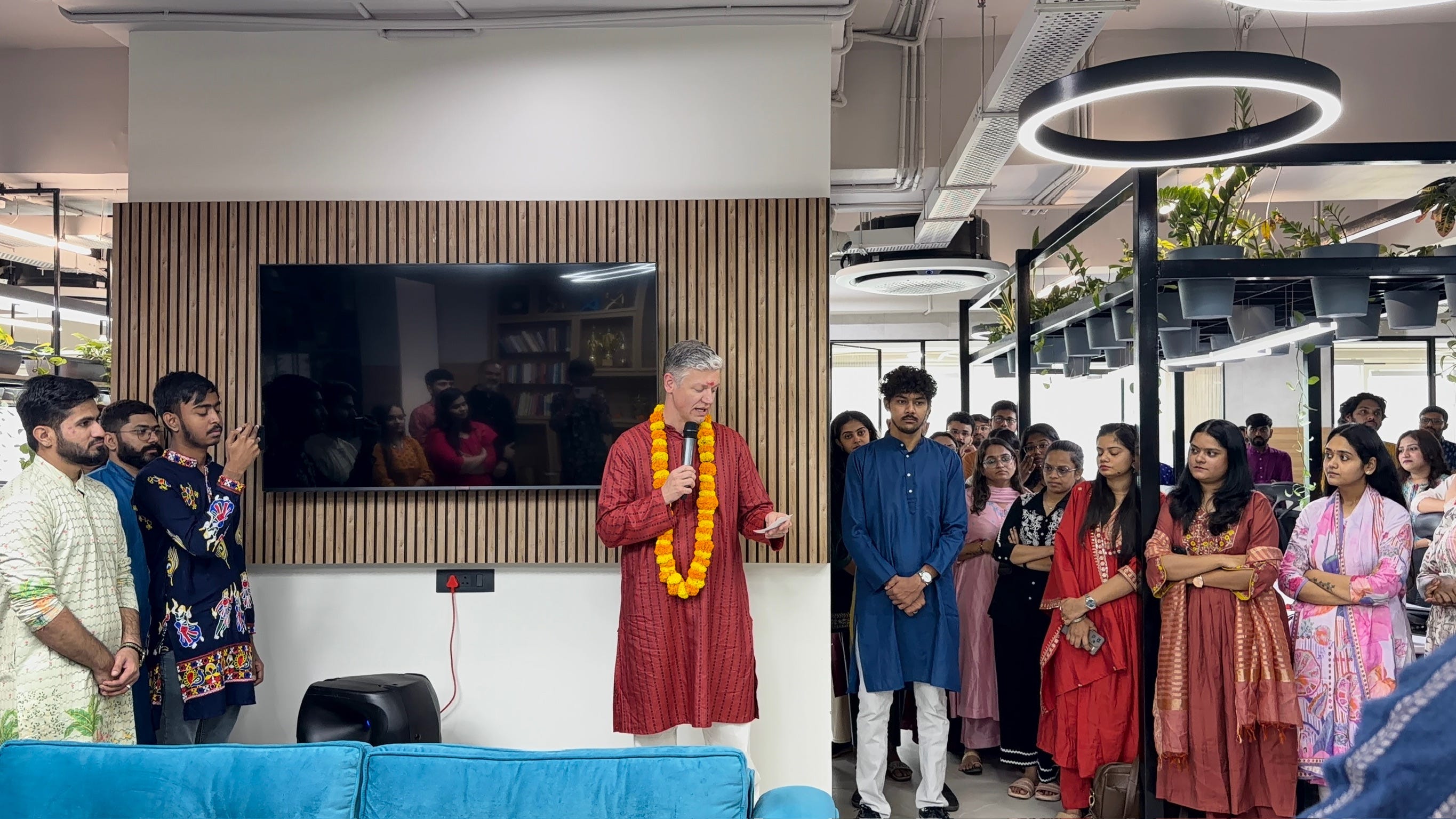
I am a remote CEO with a team primarily in India. That makes visibility harder. Writing solves this.
Weekly written memo to leadership
Monthly memo to the full company
Quarterly all hands with OKR rollouts, recognition, and Q&A
If I do not repeat the story, someone else will replace it with theirs. We have to say something at least seven times before they hear it the first time.
What I Am Still Figuring Out
Leadership is never done. Here are places I am actively improving:
Expanding OKR ownership deeper into the company
Raising the bar on data literacy and business writing
Pushing root cause analysis and first principles thinking
Creating more working sessions that are as energizing as those in-person visits to Ahmedabad
Finding new ways to be present with a global team and still protect focus
When you scale past 30 people, the job changes. You go from pushing the business forward to building the system that moves the business forward. Almost all of my business problems and opportunities can be distilled into people problems and opportunities.
That shift is the work.
My Advice If You Are Entering This Stage
Put your vision on one page
Share it so often people joke about it
Pick a cadence you can keep
Force clarity through writing
Develop leaders through coaching
Keep evolving your org structure
Communicate more than you think you need to
If you do these things, your company will move in one direction, together.
Because running a 30-person team and a 300-person company are not different jobs. They are different games. And now you are playing the bigger one.